Friday, March 20, 2015

Magic, Reality and Magical Realism

I recently finished reading Nnedi Okorafor’s Who Fears Death and it was as fantastic as the reviews lead me to believe. It takes place in a post-apocalyptic, yet magical, future Sudan and thus shares some aesthetic elements in common with both the science fiction and fantasy genre such as guns and computers and sorcery, spirits and dragon-like creatures respectively. Yet these elements were more literary than the speculative approach I am familiar with in the other science fiction or fantasy books I routinely read. I would consider magical realism the most appropriate genre label for the book. The experience of reading this entertaining and enlightening story got me thinking back to my previous essay, “The Magic of Writing and ReadingFantasy,” and the relationships between magic, fantasy and realism. Magical realism and fantasy each approach reality and negotiates the relationship between the numinous and mundane, albeit in uniquely distinct ways.  

The difference between magical realism and urban, alternative-history or retro-futuristic fantasy sub-genres is the importance they place upon the supernatural elements of the narrative.  Traditional fantasy functions as a magical world alternative to our own mundane world. This is even true when this other world shares its appearance with our own as is the case with the urban, alternative-history or retro-futuristic (steam-punk) sub-genres of fantasy. By contrast, magical realism represents our own world suffused with the supernatural. For the latter genres, the supernatural is of principal importance and the narrative is devoted to speculating on how the inclusion or intrusion of the supernatural would affect our mundane world. For magical realism the supernatural is naturalized back into the world as an assumption of it, equally mundane to the elements recognizable as part of our own world. Magical realism makes the magical mundane and enables us to see the natural as numinous. 


A great focus of the fantasy genre is the exploration of and negotiation between the natural and unnatural realms of the world, presupposing some form of division or barrier between the two. In epic and high fantasy this takes the form of a struggle between powers of good and evil in order to restore political, if not cosmic, balance in the world. Alternative-historical and retro-futuristic fantasy is concerned with the consequences of supernatural intrusions upon our historical past, while urban fantasy focuses upon the inclusion of the fantastic within our contemporary urban cityscape. In all such forms of fantasy, the supernatural is of primary importance and independently influential to the narrative; not only are magic systems and mythological creatures elaborated upon in greater detail but the narrative itself is driven by such examination. Magical realism reverses this relationship, making the mundane more important that the magical and utilizing the unreal more like a metaphor for political and cultural forces than an independent force to be comprehended. In traditional fantasy sub-genres, the presence of magic is problematic, whereas within the magical realism sub-genre it is perceived as perfectly acceptable. For magic to be accepted in the former it must be explained, whereas for the latter its very acceptance by the characters makes it intelligible for the reader. 

Whereas much of the fun of fantasy is speculation upon systems of magic or fantastical species, magical realism appears as the absence of such introspective imagination. In the majority of the fantasy genre, the unreal is essential to understanding the place and plot of the story. This requires elaborate explanations to bridge the world-building estrangement of the reader between their world and the literary world. But it also entails that the characters themselves must understand, control, or utilize the unreal (magic typically) in order to drive the plot. But in the magical realist sub-genre the unreal is peripheral, not essential, to understanding the world and changing it.  In fact, magical realism entails an intentional refusal to understand the magical or fantastical elements of its world, simply accepting them as they present themselves. In magical realism the narrative and characters are indifferent to the fantastic when confronted by it, continuing on as if nothing extraordinary has occurred. Magical events are mundane affairs, deriving their metaphorical relationship to the lives of the characters and their struggles. In contrast, the magic of traditional fantasy tends to be extraordinary affairs that are themselves a challenge confronting the characters. Information and explanation for supernatural beings and happenings are intentionally ignored in magical realism. This withdrawal of wonder away from the supernatural is necessary to the policitized nature of magical realism for it focus the narrative on more mundane and immediate political or cultural struggles. But more importantly it eschews explanation in order to represent a world with inherent legitimacy, ideally liberated from our ideological limitations. 

Magical realism is not mere chaotic fancy however. Although its fantastical elements may lack systematic explanation and justification, it is not necessarily arbitrary or inconsistent.  The tears of children could consistently turn to butterflies or whenever someone dies all the sources of heat and light extinguish without the story sliding into a more traditional fantasy narrative. What is essential is that such regular occurrences are not justified by reference to a pseudo-scientific system of magical laws and forces but are simply accepted without inquiry much as one could mention crying or death itself without great detail. This is because mourning and mortality are universal aspects of the human condition we can appreciate without having to deconstruct them beyond their phenomenal experience. When magical realism portrays such experiences as fantastical it does so to highlight something inherent in that very real experience. Other forms of fantasy impose magic upon the mundane rather than drawing it out of it to thereby speculate upon how that experience changes the underlying reality. The fantastic in magical realism is not explained as if it were a reality itself, but rather serves to explain some other, more immediate and fundamental reality, usually cultural or political in nature. 

First-world fantasy genres such as science fiction, urban fantasy, alternative history or retro-futurism derive their realism from being set within our world or some alternative to it with any explanatory narrative that makes it intelligible as our own world. This is so even when this is impossible relative to our worldview; for example, urban fantasy is impossibly our world since it includes magical forces we do not predict to be possible within the world we inhabit. What is crucial is not how recognizable the world is to our own, but how possible that world is to us, even if its possibility is grounded by the logic of its own world-building. By contrast, since magical realism forsakes such elaborate explanatory justifications its realism is derived entirely from it being recognizable as our own world to some extent. The magic of fantasy literature makes new worlds, even when those worlds are considered fantastical alternative versions of our own world. In contrast, the magic of magical realism is in this world.     


The sub-genre of magical realism and other fantasy sub-genres each contain a contradiction and source of tension between the reader, their world and the world within the text, all of which revolves around an encounter with reality. Fantasy is realistic because of the way it explains its world according to rules we would recognize even when the world itself is impossibly distinct from our own. Fantasy strives to logically explain a world that violates the rules we understand. In contrast, magical realism ignores explanation and depends upon the indifference of its characters towards the supernatural in order to establish its realism. Magical realism seeks to represent the world sincerely through fantasies we may consider to lack all credibility. Put another way, in fantasy the world is explained to us in terms that we would understand even though the world may violate our understanding while in magical realism we are presented with the way our own world is understood by someone fantastically different from us.       


Magic in fantasy genres other than magical realism is systematic if not pseudo-scientific. It has established rules and regularities regarding who can perform it, when they can do so, what its predicted effects will be, etc. All of which presupposes a distinction made between mundane regularities of the world we would recognize and the fantastical ones we would not. Even if the magic was a science in method and was predicated upon predictability as much as scientific materialism itself presupposes, it still requires elaboration to be comprehended because its predictions are in conflict with those of our own sciences. For example, if sorcerers can fly or summon fire, the nature of such magic must be reconciled with our own understanding of gravity and thermodynamics. If not, the reader will likely be left unsatisfied and the critic will classify the work as mere fancy rather than consider it serious fantasy. 


It is wrong to draw a strict dichotomy between magical realism and the rest of fantasy as though the former was divorced from reality and the other one not. It is far better to situate their difference along a spectrum of realism. At one end of the spectrum is the more “experiential” fantasy of magical realism: reality enters into the narrative through the matter-of-fact disposition characters have towards the unreal who merely accept it as another mundane facet of their experience. At the other end is the “existential” fantasy of most other sub-genres: reality is provided through the elaborate explanations of its unreal elements which provide a parallel to the rule-governed nature of reality we are familiar with. For magical realism, magic serves as a metaphorical reproduction of some element in our reality such that the fantastic is an effect of our world. In traditional fantasy, the unreal possesses a reality inherent in itself and exists in its own system of causes and effects unique to its own world.    


Fantasies could exist well within these two polarities but some of them could be particularly alienating depending on how far the unreal deviates from our own familiar world.  Precisely because magical realism represses explanations of the fantastic, it depends upon some familiarity between the reader and the world of the story. Magical realism uncovers the magic within a world, our world, by extending features of it into fantastical metaphors while other forms of fantasy seek the unreal outside of our world in other worlds bound by their own logic and laws. A story that combined these techniques would struggle with the immediate experience of a world radically different from our own existence. Such a story would be a fascinating, if not frustrating struggle, to not only imagine a world other than our own, but to experience it as if one were embedded within that world.          


The fact that the fantastic is taken for granted in magical realism provides the realism of the sub-genre. The inclusion of magic makes the world impossible for us, but the immediacy of its presentation makes it possible for us to imagine ourselves within that world regardless.  Because the narrative does not recognize the fantastic as strange, we are not estranged from the world. But this requires that the world be intelligible to us without explanation, even if such a world is not believable. This presupposes some familiarity with the fantastical elements of the story and for this reason magical realism typically derives such elements from familiar, albeit marginalized, mythologies and folklore. If a character’s grandfather is a literal angel from heaven in a magical realist story, one can understand more or less what this may entail, even if such a person does not believe in angels. But if a fantasy story features an original race of shape-shifting metallic entities from the moon, the originality of such creatures independent of any grounding myth or folk story would be alienating and beg narrative explanation for the reader. 


Magical realism is more dependent upon established mythologies than traditional fantasy is to ground its credibility. But precisely because it represents the magic of mythology and fantasy of folk stories with immediacy, it lends credibility to such marginalized world views. In contrast, traditional fantasy, despite its tendency to focus its creativity within the confines of European medieval culture, is fundamentally unfettered by a dependence upon pre-established narratives of the fantastic. The best the other fantasy sub-genres offer is re-interpretations of the unreal or innovative representations of the magical; vampires can be re-imagined as sentient trees that feed upon those who threaten their forests or one can create a new race of intelligent necromantic octopi who raise corpses to serve as their surrogate bodies on land. The limitations are not pre-established by fidelity to history or mythology but arise spontaneously as each element of the world is imagined. 


Literary realism is not simply a function of what is presented within the narrative of the story but how that narrative itself is told to us, especially when it is told through the characters within the world of the story. Realism is not limited to the depiction of “real” objects we recognize as part of our own lives, but encompasses the way that literary characters recognize and interact with the objects of their own world in a realistic manner. What unifies magical realism and other genres of fantasy is how they depict magic realistically. The narrative and the characters of the story take the world they inhabit seriously; they are capable of interacting with the magic in the world and consider it important to their struggles, even if it is only in a derivative and metaphorical sense as is the case with magical realism. Magical realism is realistic because it presents the fantastic as mere mundane facts of experience the characters encounter. Other forms of fantasy are realistic because they investigate the existence of magic in the world as a systematic force with rules and regularities. Magical realism allows us to appreciate a different way of seeing our world, while fantasy allows us to appreciate a different world entirely.

Monday, February 16, 2015

The Magic of Writing and Reading Fantasy

Over the past year or so I have been struggling with writing fantasy literature and because fantasy is such a misunderstood form of literary art.  Fantasy is often contrasted with science fiction, with the latter genre considered superior to that latter.  I disagree both with the conceptualization of the genres as absolute opposites as well as positioning one superior to the other as I have argued elsewhere.  I find some criticism of the genre warranted, insofar as fantasy is morally irresponsible and culturally insensitive as I have argued in previous essays on the subject.  But I do not accept the criticism that fantasy is literature only fit for children, while science fiction is, at least potentially, acceptable for adults.  I assume that fantasy is criticized as childish because of its playfulness with reality and its fascination with magic, judged as an immature and irrational mode of perceiving the world. 

All fictional literature is fantastical in a banal sense.  Literary fictions invent people, places and events as part of the narrative experience and even the most historical forms of literature must be original with their thematic structure and character dialogue.  Fantasy is a genre of fictional literature but unlike historical fictions which attempt to reflect our real world or science fiction which attempts to imagine some alternative to our world (usually but not necessarily set in the future), fantasy fiction imagines some unique world all its own.  Even when a fantasy story is situated in some point parallel to our world history, it necessarily cannot be our world since by its nature fantasy involves an impossible deviation from our world history; a World War II story involving a cabal of Nazi necromancers in a secret war with a circle of British druids is fantasy, despite its historical setting, because of its inclusion of magic which is not historical, at least according to our current understanding of the world.  So while all fiction is creative with reality by imagining ways that the world was, is or could be, and is therefore fantastical to an extent, it is only the fantasy genre itself which consciously avoids consideration of this world in all its historic possibility and instead invites us to imagine the history of an entirely unique alternative world.    


Fantasy is a still developing, and of all genres it has the most potential for development since it is not constrained by a concern for historical realism.  Much of fantasy has been, and continues to be, fantastical versions of feudal Europe replete with all the cultural and moral problems endemic to romanticizing that society.  Fantasy writers are just beginning to explore the edge of the genre and push its boundaries further by writing in sub-genres such as steam-punk, science-fantasy, new weird or urban fantasy.  As I have argued in detail in other essays, fantasy is not, and should not be, limited to the tropes of knights, dragons, dwarves and elves but includes anything that deviating from historical continuity with our world view.  Fantasy is incredibly flexible in its imaginative potential; it encompasses underwater empires of sentient insects to spaceships powered by the souls of dead gods to time-travelling demons of a trans-dimensional hive-mind.   But nothing is more magical in a fantasy narrative than a system of magic; magic is not merely a part of a fantasy world but is a fantastical way of acting in, if not creating, that world itself.    


Although an authentic fantasy story can be written without magic, I think its inclusion in the narrative provides a unique opportunity for understanding the genre.  Magic systems can aid in explaining the appeal of the fantasy genre as a whole but can also exonerate it from judgment as irrational immaturity.  Rather than being the very thing that condemns fantasy to criticism, magic can liberate the literature from it.  But first, what is magic? Magic, broadly defined, is the causal manipulation of the world through ritual symbols, gestures or words.  Systems of fantasy magic are fundamentally systems of language.  But instead of merely describing the world, they command, alter or create the world itself. When a mage’s gesture or incantation conjures a familiar or creates a flame, that act of magic is an act of communication in some sense between the mage and the world.  It is a communication that compels the world to conform to our desires, to understand us.  If the belief in magic is intelligible it is as the belief that language, if not literature particularly, can change the world. 


I came to this epiphany as I began to write fantasy stories; as I was writing about magic I became aware that I was practicing magic itself, albeit in a modern and mundane form.  I commit myself to my ritual of finding a quiet coffee-shop, open my laptop and type out worlds that come to form original worlds in themselves.  Writing is most true when it emerges from the intimacy of personal experience and I believe that fantasy, despite its defiance to historicity, is no different.  But the personal experiences that inform the magic of the fantasy genre is the wonder of writing itself, of creating worlds unto themselves through mere words.  I imagine that the authentic fantasy writer or reader is uniquely able to live within their fictional world insofar as the art of writing and reading about it provides the very alchemy to transform it from mere fantasy to reality.  For readers or writers of other of other genres, the continuity between the narrative and our own history takes primacy and provides the element of realism, doing much of the work for the reader themselves.  But for the fantasy genre, reality is ironically supplied by the imagination itself since the more magical the world is, the more it mirrors the art of literary language.  Just as the mage must master words of magic power to shape the world to his desires, so too does must the writer and reader of fantasy wield the precise words so she may articulate her imaginings.    


Just as fantasy is concerned with its own imagined worlds and not our own world extrinsic to it, so too is the very power of that very imagination intrinsic to the text itself.  It arises spontaneously from the parallels between the capacity of the writer or reader to create the world through words and the world within the text itself to be responsive to the communicative power of magic.  Fantasy neither depends upon our world to be understood nor to be imagined, but is perfectly capable of being self-contained.  In this way is the genre inherently interesting simply for its singular creativity of world-building.  Fantasy literature appeals to the creatively inclined soul and many of those who critique it for its immaturity I suspect are simply immature in their own capacity for imagination.  For those possessed of such a capacity though, the appeal of fantasy is apparent insofar as one appreciates the creativity of writing in general, of which fantasy is paragon and an elaborate system of magic is its pinnacle.  And to any critic who alleges that it is easy to write fantasy precisely because it is unregulated by historic reality, I find this claim simply incredulous.  Great fantasies require not only immense imagination but also a delicate attention to words so that one can articulate that imagination.  One must be especially creative and careful when crafting out an elaborate system of magic for the world one is writing since magic is not merely a description of that world but is the language of the world itself.


Magic as a language by which the fantasy world comprehends and obeys commands is both a creative achievement of the fantasy writer as well as a limit upon the potential creativity of the reader.  Systematic magic is simultaneously an example of superior world-building by envisioning a fantastic ways in which the world can be changed while the rules of that system help constrain the flight of fancies that are inspired in the reader.  The challenge of building a magic system, and fantastic world-building in general, is to create something original and interesting enough that it inspires the reader to invoke their own imagination while also being  systematically detailed enough to avoid arbitrary creativity.  World-building must avoid being so vague that the narrative lacks coherence and comprehensibility.  But it must also ensure that it is not reduced to a restrictive totality of exhaustive explanations and info-dumps that deplete the imagination and interest of the reader.  Our own world defies exhaustive description and it is equally foolish to attempt the same with a fantasy.  World-building should not become so self-indulgent that it stagnates the creativity of the reader to imagine the world for them self.  World-building that constrains the reader with exhaustive explanations and narrow possibilities is like the shadow of some dark god that eclipses all hope of freedom.  To create such a world is to practice not merely bad literature but it is to invoke black magic and dominate, rather than liberate, the spirit of others.  Fantasy worlds are read as much as they are written into existence and for the magic of literature to operate the reader must be able to speak the language of the writer, they must be made an initiate of the imagination.        


The magical writings within fantasy literature serve as a mirror to the mystification and enthusiasm of the fantasy text itself.  This mirror image may even come to be crystallized within meta-fantastic literature: fantasy stories about fantasy stories themselves.  For example, a fantasy story may feature a magic system where mages can summon mythical creatures from the texts of fables or fantasy creatures are disappearing in the world because the books about them are being burned by religious fundamentalists.  Other examples could include an evil god controlling people by editing the book of their lives stolen from the library of the gods or there could be a fantasy story where wizards can hop between worlds by literally escaping into texts about those worlds themselves.  In each example, there is the primary fantasy narrative, but within the story is a secondary level of fantasy literature tied in with the magic system of the primary text.  Such self-reference may not only be entertaining commentary but enlightening criticism of the fantasy genre as well.  One may use it to speculate on the structure of imagination, the importance of literature to society or the responsibility of writers to the lives of their fictional creations.  It may also allow the author to situate their work within the history of fantasy genre so that they can juxtapose the world of their writing to that of another writer within the former. 


Meta-fantasy also allows the text to break the fourth wall, so to speak, by reminding the reader that the world of the story is not a complete reality unto itself meant to be indulged in solely for its own sake but is a construct integrated with a narrative and ideology whose significance transcends the confines of the text.  Fantasy enthusiasts are often criticized for being compulsively obsessed with the nature of the fictional world they have escaped into but are inept, ignorant or indifferent to the real world around them.  Caricature though this may be, I do think it to be a legitimate concern of the genre.  It should be recognized that all fiction, and not just fantasy, is vulnerable to this sort of indulgence; fantasy simply receives more criticism because it doesn’t purport to be historical in content.  The magic of meta-fantasy can be employed to ameliorate some of the anxiety over fictional over-indulgence in creative ways not available to other genres of literature. By referencing the fantasy text as a text, criticizing obsessive escapism or clarifying the nature of fantasy and imagination through meta-fantastical magic, the author provides explicit disavowal towards irresponsible escapism that an attentive reader would recognize and internalize.    


Fantasy is criticized as escapist, as seeking solace from the injustices of the world in the illusions of literature.  If anything, fantasy is the least capable of providing this form of escapism since it is preoccupied with an inherently impossible world.  It is other genres of literature, with all their pretension to represent reality, that provide illusory comfort.  One enters into a fantasy, not to live within it, but to look back upon our world from its vantage point, so that we may change this world.  The magic fantasy provides is not a retreat from this world but an intrusion into this world.  Fantasy literature is not merely a product of the written imagination but reading it is an instruction in exercising one’s imagination.  One learns how to weave words together to create alternative worlds just as a sorcerer learns the spells necessary to exercise his will upon the world.  The refusal to learn from one’s fantasies is a betrayal of the genre.  Fantasy enthusiasts who find nothing in it but the indulgence of an illusion are akin to men suffering under the spells of a sorcerer, ignorant of their curse.  By putting our dreams of liberation into words we give them the opportunity to live in the mind of others and thereby change their world and our own.  Despite being words for another world, impossible for us, the ideals we struggle for are not impossible but are rather necessary across worlds.  That is the magic of moral vision: it is not constrained by the world, but commands how the world is to be shaped. 


Simply because fantasy is disconnected to the history of our world does not mean that it cannot change our history.  The immense and progressively normalized popularity of the genre is a testament to its potential to inspire change through mass movement.  It may be that the genre’s very playfulness with the narratives of our histories provides what is needed to change our history rather than merely escape from it.  Fantastic stories allow us to occupy perspectives radically different than our own disregard the burden of history that encumbers our capacity to empathize with others.  And by being estranged from identifying with our own narratives we may come to see that they are themselves arbitrary fantasies, forced upon us by the violence of history.  The magical aspect of fantasy reveals the inherently ideological nature of reality; just as the mage’s words of power shape the world, so too does the power of the ideologue’s words shape our world.  Fantasy gives shape to the monstrous ideologies that threaten our lives by literalizing them into the grotesqueries forms that they are.  We are awoken from the spell of our false consciousness and dispel the illusory ideologies that control us through the rationalizations of history and science.  Fantasy, through its free-flow of creativity collapses our conditioned patterns and prejudices of thought.  It does not provide the answers, but it may provide a portal to glimpse them through.    


It is with unfortunate irony that the fantasy genre has been accused of sub-literary quality.  Unfortunate because there is a great wealth of aesthetic creativity and moral imagination that occupies much of the writing and ironic because fantasy, of all genres, takes literature the most seriously and invest it with the most subversive potential.  Other genres of fictional literature write about our world as a given; the very credulity of science fiction depends upon the pseudo-inevitability of its projected future.  The effect of this is to relegate literature to the role of reproducing our world and confining our imagination to it.  Even science fiction, much lauded for its progressive optimism, proceeds to imagine the future as a projection from our current perspective and thereby constructions the future from within those constrains of privilege and power.  No wonder then that so much of the imagined futures of science fiction are preoccupied with the colonialism and militarism of white saviors battling against some alien other we have projected those very same sins upon.  Fantasy, for all its flagrant infidelity to reality, may be the best suited to bestow upon us the wisdom that we do indeed live in a magical world.  One only need find the right words to summon its secret power. 


Saturday, November 29, 2014

Culturally Appropriate Cultural Appropriation

Cultural appropriation can be defined as taking the cultural knowledge, ritual or items of a cultural community, specifically a minority community, without their permission.  This is wrong because it deprives the minority community of the empowering uniqueness of their own culture against that of the dominant culture which has appropriated their culture into itself.  This process can perpetuated minority stereotypes by modeling the impression of minority culture and can normalize oppression by redefining such inequality as a part of the culture rather than a conflict between two cultures.  Cultural appropriation is routinely discussed in relation to white privilege for it is the latter that enables the former and the former that reinforces the latter.  

White people occupy positions of power that allow them to redefine their own culture and those of minorities for oppressive exploitation, often in the form of imperialism and colonialism, making their dominating culture more invisible and therefore more impenetrable to resistance.  If the oppressor appears to be the same as the oppressed they are not only harder to recognize and criticize but they are also able to redefine minority culture by the superficial semblance of being a member to it.  This covert oppression is all the more offensive when minority culture is redefined through representations of negative stereotypes by those in power.


Discussions of cultural appropriation operate as if one could comprehend a culture scientifically as a discreet empirical unit that can be abstracted out of the ongoing progress of cultural assimilation for analysis.  Because a culture is historically mediated and history is an interpretive reduction of events, culture is continually being re-defined across time according to the priorities and experiences of its current historical context.  Cultures borrow from one another in order to preserve themselves.  Even the most reductively fundamentalist interpretations of a tradition are inherently appropriative and interpretative.  They reduce an entire cultural history down to those elements which resonate with contemporary concerns and dynamics of power between other cultures and defend such elements through the appropriation of foreign technology and ideology.  


One can only understand a culture through its current context but one can more honestly and respectfully negotiate with it.  The cultural fundamentalists do not have an honest or respectful relationship to their culture because they believe that they are preserving it against foreign influence even as they are erasing recognition of it and preserving what remains through the very foreign influences they fear.  One must perpetually negotiate between one’s inherited tradition, authority and the commodities of one’s collective history.  Such negotiation arises from within a culture in relation to others and this process precludes it from being abstracted out of its current context as a distinct item of scrutiny. 


Cultural items are often treated by those discussing cultural appropriation as if they all operate as commodities of identity-political investment, as if each item in a culture could be reduced to a mere ideological representation of the cultural community.  Each item is likely to have a plurality of interpretations to its cultural significance and is likely to transcend any local culture.  Items of any given culture are ironically likely to belong to some other culture that had already been appropriated into its own (pasta being an identifiable aspect of Italian culture despite having it traced back to Chinese culture).  So when one culture complains against another that it is being appropriated, it is probably a conflict over the appropriation of some third, likely forgotten culture; the appropriation of one of the cultures simply appears more innocent as its appropriation has been forgotten by history and has become accepted as an essential part of the dominant culture.  

Even if cultural appropriation was ended it would be difficult to determine who belongs to what group and what belongs to each group and who has the authority to define these limits, especially since these tend to define one another. And if an item has a plurality of interpretations, then once appropriated, who determines its meaning and who determines the significance of it being appropriated based on such meaning?  Who has the authority to define the boundary of a cultural identity is ambiguous and may be relative to the values and beliefs within each culture which would themselves be defined by those recognized as legitimately authoritative within the community.  It is commonly said that for cultural assimilation to be appropriation, one must be invited into a culture in order to participate in it.  But this requires someone with the authority to invite one into the culture, and one must be sensitive to such variance.  To assume that anyone speaks with authority for their culture would be presumptuous on their part and one’s own. 


One must be sensitive to the context of ritual or artifact and who is available to legitimate its adoption.  So too must accusations of illegitimate cultural appropriation be tempered by personal understanding; without understanding the significance of the item to the person, one cannot be confident that their adoption of it is insincere.  Perhaps the white woman wearing a bindi is in fact a Hindu convert or the white man in a keffiyeh has a Palestinian wife with family in the West Bank.  So much discussion of cultural appropriation occurs around the internet which makes spectacles of de-contextualized images and video such that a seemingly offensive example of cultural appropriation may actually be a meaningful gesture of solidarity.  This inattentive disregard for a nuanced understanding of cultural assimilation and participation has only served to reinforce an oppositional binary between people of white privilege and people of color.        

The rhetoric of cultural appropriation places emphasis on cultural appropriation as analogous to theft; it is the theft of a minority people’s cultural heritage.  And while such rhetoric is superficially convincing, further scrutiny proves that it is insubstantial and often incoherent in many contexts.  Understanding cultural appropriation as theft presupposes that culture is to be understood as a finite resource possessed exclusively by a particular population that can be exchanged, freely or through coercion, between populations.  If culture was not finite, if it was not bound to any particular people, and if it cannot be exchanged, then the analogy to theft breaks down.  


As said before, cultures reflexively change over time by selectively emphasizing their accumulated traditional histories, emphasizing and transforming particular elements over others.  Such a process occurs within the context of the community’s contemporary interests in relation to other communities such that any given culture may, and indeed must, incorporate elements, often in the form of technological artifact or political ideology, from other cultures, in order to preserve its own communal identity.  No culture can be considered in absolute isolation from the influence of other cultures since there will always been some overlap between it and others and thus culture is not bound to any one community, but multiple cultures may be present within the same community with each culture overlapping in shared knowledge, rituals, or artifacts.    


Even if a culture can be understood in abstraction as a finite number of ideas, customs, rituals and artifacts, there is nevertheless infinite potential for the interpretation of these items and their infinite relations between one another across time and place within the identifying community.  The idea that one can exchange these items between cultures becomes obviously incoherent in most cases since exchange requires the transfer of something from one person to another for something else, with each party losing an item in exchange for gaining another.  Particular political institutions and arrangements must be in place for cultural appropriation as a mode of cultural theft to be coherently criticized.  Only if the exchange of culture is unequal between parties and presupposes some restriction on the cultural expression of the minority by the majority is it intelligible.  


White Americans innovating upon African American music and dance is in itself should not be condemned unless it occurs in a context where African Americans are not allowed to express their own culture in a way that white American are allowed to express what they have appropriated from them.  Otherwise the appropriation is not a deprivation of the minority culture but merely an imitation or interpretation of it that expands upon it rather than restricting it.  Cultural appropriation may be fraudulent or deviant but it is not blatant theft unless it necessarily entails that once adopted by another culture, the original culture is unable to participate in their own traditions to the same degree.  There is no loss of a culture when it is practiced, worn or used by other people, even when done radically differently; it is simply an expansion of that culture or a redefinition of it.              


The threat of cultural appropriation is said to coincide with the pressure towards cultural assimilation into the majority culture.  People of color not only feel that they are being deprived of their culture as it is being made a commodity of white culture but that they must adopt white culture itself as their dominant form of expression, abandoning their more traditional community beliefs and customs.  A Chinese immigrant to America may simultaneously feel that their culture has been appropriated into parody through Chinese restaurants and television stereotypes while simultaneously feeling that they cannot authentically express Chinese culture as they received it because it is too exotic or offensive to conform to the stereotypes expected by Americans.  In making such claims it is crucial that one distinguish between white culture and the culture of people with white privilege.  White culture is synonymous with the ideology of capitalism and is the cynical denial of having a culture because every element of culture is a commodity that can be purchased and sold as a means of self-expression and empowerment without any measure of identification with it.  People of white privilege are those who are considered white and are thus in an advantageous position in society thanks to their rejection of identification with any particular culture in favor of a generic and cynical distance to any tradition except for the commodification and appropriation of other traditions.  

White culture is a threat to all cultures, even those who benefit from white privilege since the precondition for the privilege is the disintegration of their cultural identity.  What people of color rightly fear is the appropriation of and assimilation into white culture, not the culture of white people such as the Irish, Italian, and Jewish, etc.  It is not so much a conflict between cultures appropriating and assimilating one another, but between sincere cultural identities and an insincere commercialization of those identities.  Thus white people, insofar as they recognize that their privilege is predicated upon the repression of their own particular traditional heritages, are potential allies of people of color in their struggle against cultural appropriation.  It is not the identity of the appropriator that should be cause to offense, but the mode of appropriation.  It is too easy and too dangerous to fall into the trap of identity politics and immediately accuse a white person of oppressive cultural appropriation simply because they are white.  This unnecessarily antagonizes potential white allies whose white privilege affords them a degree of freedom that is practical to the struggles of people of color and can afford them a cultural space of appreciation not otherwise afforded to them when their culture is strictly segregated from the culture of white people.    


Being offended by the cultural juxtaposition of a white person for merely sporting dreadlocks or wearing Native American patterns is the reduction of ethics into aesthetics.  There is no moral consideration of the rights of the white person or the culture that they have appropriated to determine whether it was legitimate or not but there is merely the tasteless image of a white person adopting elements of another culture considered inappropriate for them.   This represents a slippery slope towards racism since it judges one superficially based on their racial and cultural identification regardless of how they value or respect other cultures.  Ironically, this insistence on cultural purity from the corruption of white appropriation mirrors the concerns of white bigots who fear that people of color are infiltrating their culture.  This is also reminiscent of other-obsessed fundamentalism insofar as it is overly obsessed with the other’s culture and rather than maintaining a focus on the significance of one’s own traditions; what is considered important is that white people do not engage with the culture of people of color not that people of color have their culture acquire greater exposure or that it be positively received and reinterpreted in other cultures.  


When white people ignore the significance behind an element of another culture, or make claims of false claims of authenticity for profit, or when they appropriate symbols of resistance to depoliticize them, then they are no longer allies because they are reinforcing the oppressive commodification of culture.    This reactionary strategy of closing of interaction between one’s culture and others is unlikely to preserve itself and far more likely to only reinforce stereotypes, exotification and fossilization of the community further through lack of exposure.  Communities must be willing to endure the transient trauma of appropriation, accommodation and assimilation between their culture and others if they are to maintain relevant to their contemporary contexts.


Insofar as the white privilege of cultural appropriation is a reflective of white culture, then the appropriation of culture from people of color appears to be without problem.  To claim that it is problematic would require that elements of one culture appropriated by another be abandoned to the exclusive right of their original community.  To fail to do so would be hypocritical for it would require one culture, white culture, to abandon the appropriation of other cultures while allowing all of those other cultures to continue in their appropriation of one another.  One could only claim that items incorporated into white culture are not white if the concept of cultural theft makes sense, and since it has been argued previously that it does not absent a direct relation to oppression, one cannot determine the limits of white culture from outside of it.  Only white people can determine what white culture is, just as only people of color can negotiate the limits of their own culture.  


If white culture is expansive and inclusive of minority customs and creations then all the better for it, assuming that such expansion does not require the original culture to disavow ownership .  If white people started to wear the kimono or bindi or keffiyeh while recognizing that these originated in other cultures and are still significant to them, then there would not be a contrast between mundane white culture and exotic non-white cultures but degrees of participation in cultures, with white culture being on the periphery of experience.  What is offensive is when a white person attempts to be a non-white person by means of adopting stereotyped behavior and costume, even if such behavior is meant to be flattering.  Another culture is not a costume; it is not something that one “puts on” as if the underlying universal was white culture.  A white person may appropriate and even participate in Arab culture, as I do with my Syrian girlfriend and her family, but I will never be Arab and it would be offensive if I attempted through over-identification to act as if I were.       


The binary opposition between a people of white privilege majority and a people of color minority is ironic since it reproduces the logic of commodification inherent in harmful practices of cultural appropriation.  This is because it reduces a cultural item to a commodity devoid of significance beyond signifying the cultural community itself just as a capitalist commodity is a symbol of expression for the individual consumer.  This produces a further binary between cultural significance and cultural representation, the former being the meaning and significance of any given practice or artifact to a community and the latter being the practical or material form it takes.  


Those in power conscientious to the perils of cultural appropriation do appropriate minority culture to the extent to which they internalize the significance of these rituals and artifacts but they do not practically or materially express this since they understand it to be offensive.  The individual who refuses to wear a bindi or participate in belly-dancing out of the fear that it will be offensive to the Hindu or Arab communities respectively, stands halfway within each culture; they have appropriated an understanding of the bindi or belly-dancing as of exclusive significance to each population, and in identifying themselves as outside of this population, refuse to participate in their customs.  This is paradoxical since the interpretation of the bindi or belly-dancing as such arises from within its own local culture, but the refusal of each makes apparent that one stands outside the culture as a contradiction to it. 


What cultural assimilation discourse often overlooks is the possibility of people of color commodifying their own culture.  This doesn’t have to simply be examples of people of color selling their culture in order to economically sustain itself in an increasingly globalized capitalist economy.  This already presupposes that the cultural item is devoid of sacred significance and thus can be traded like any other profane item in a market economy.  So even if Indian women are not buying and selling bindis in a capitalist economy, they can still understand the bindi without any relation to the sacred as a mere aesthetic commodity for their own self-expression.  Indeed, this process of commodification is what allowed people of white privilege, the Irish, Jewish, Italian, etc., to be considered white and occupy a position of power in society.  By divesting themselves of cultural signifiers that distinguished them from those who already possessed the privilege of white identity, they too could be incorporated into white identity.  And while some people of color may never be considered a white person, they may nevertheless commit the same sacrilegious commodification of their cultural heritage.  

While this process could be traced back to white colonialism and imperialism and the intrusive pressure to conform to capitalism, it is nevertheless true that the commodification of a culture may be in place before white people even begin to engage in the cultural appropriation of it.  If people of color are to resist the appropriation of their culture as commodities of capitalist fetishism and the cult of individual self-expression, then they must be responsible in ensuring that the significance of their cultural items remain explicit.  If there is no longer anything particularly sacred about the bindi in South Asian culture itself, then the adoption of it by white people as a token of beauty is of no significance since there would be no misrepresentation of it.  To insist otherwise would be simply bigoted against white people adopting elements of other cultures.


Cultural appropriation and representation is inarguably offensive when done to explicitly mock another culture, particularly what it considers religiously sacred.  When people wear black face, dress as Arab terrorists or Native American savages for Halloween or draw the prophet Mohammed of Islam in an insulting manner (I see nothing inherently offensive in drawing Mohammed as such given that it has some pious precedence in the history of Islam itself), there should be no room for debate that these practices are done with the explicit intention to demean and demoralize another community for the empowerment and amusement of one’s own.  

Also offensive are false claims to authenticity or ownership of items outside of one’s own culture; non-Native American artists passing off imitation art as authentic Native craftwork is one of the clearest examples of cultural appropriation since it does deprive a minority community precisely because an item is falsely claimed to be from that community.  I have often heard Arab Palestinians accuse Jewish Israelis of appropriating their cultural cuisine and claiming it as their own, i.e. hummus and falafel are Israeli and not Arab.  But to be honest, I have never heard a Jewish Israeli make this claim, and for them to do so would be absurd; the closest approximation came from an Israeli whose family came from Morocco and thus Middle Eastern food considered Arab cuisine was indeed part of her cultural heritage and not a mere invention of colonialist reinvention.  Nevertheless, the fear of the oppressor appropriating another culture and claiming it as theirs is real and finds its precedent in the very real theft of land and wealth by colonialism and imperialism. 


But cultural appropriation is not only done to mock or discredit another culture but may naively if not sincerely be done in an effort of solidarity with that culture.  White allies of oppressed minorities should not fetishize superficial identification with the suffering of such minority cultures.  By claiming to represent them, or worse yet, be a person of color “on the inside”, white liberals run the inevitable risk of misrepresenting minorities through offensive stereotypes.  Unfortunately, such fetishism often arises out of the discourse of cultural appropriation and white privilege itself.  White privilege and the ideology of capitalism it is associated with are infinitely reflexive, able to appropriate or commodify opposition to itself.  


Capitalism can sell Che Guevara or punk leather jackets to self-styled political radicals because they believe they are rebelling against the system they are actually buying into. So too are people of white privilege capable of idealizing the victimization of people of color and turning it into a perverse form of humility.  This ritualized form of self-deprecation is symptomatic of white-guilt ridden liberals who, in a desire to appear legitimate, attempt to cultivate an aura of personal oppression to measure up against the actual oppression of people of color.  Cultural appropriation cannot be justified when it remains superficial and ignorant or indifferent to the actual struggles of people of color.    


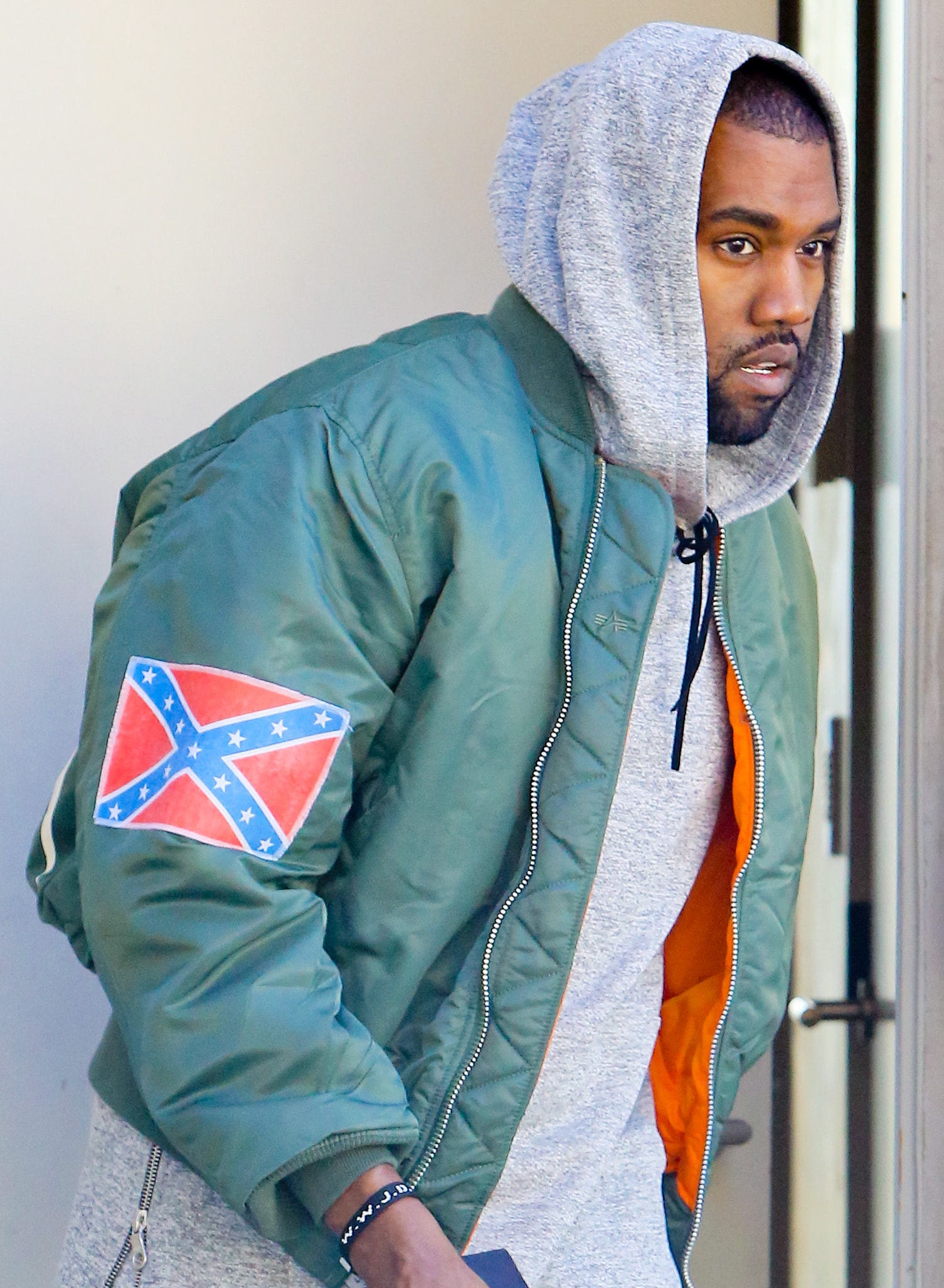
When symbols of resistance to colonial and imperial appropriation are themselves appropriated by the oppressor, the offense is particularly intense and absurd.  For Palestinians and those who support their interest of national autonomy, the traditional keffiyeh scarf has become a struggle against Israeli occupation and oppression (and unfortunately equated with the terrorist elements of said nationalist movement).  If Israeli settlers appropriated wearing the keffiyeh in the West Bank it would undermine the potency of the symbol for their cause(compare this strategy to Kanye West’s wearing a Confederate Flag decorated jacket to mock and strip the symbol’s association with the oppression of African Americans).  

Similarly, white people in general are often criticized for wearing the keffiyeh not only because they wear it simply as a depoliticized fashion accessory but because they can wear it as such without being labeled terrorist sympathizers.  Thus it is offensive not merely because the commodification of the keffiyeh into form of self-expression strips it of its revolutionary significance but those that do wear it for political purposes cannot do so freely without being accused of supporting violence and terrorism even though its cultural significance extends beyond such associations.  For this reason, white allies of oppressed people of color should be free to assimilate items of their culture into their own in order to give them wider representation in society insofar as those wearing them do not contribute to or reinforce those forces that oppress them to begin with.  Even if a white person wears a keffiyeh merely as a fashion accessory they are at least providing a depoliticized context for it that allows those that are wearing it for political reasons to do so incognito and thus avoid immediate identification and accusation of being (supportive of) terrorists.  People will still be free to understand the keffiyeh as a symbol of solidarity for Palestinian nationalism. 


Cultural appropriation is said to be problematic when it occurs in an unequal exchange between an oppressive majority culture against an oppressed minority culture.  Presumably this is because the supposed abstract theft of culture mirrors more concrete and traumatic imperial and colonial thefts of land, wealth, and the freedom and lives of their fellow people.  So when a White American appropriates African American or Native American culture it can be seen as reproducing the history of their oppression despite often appearing to be naively benevolent in intention.  But if this reproduction is to be normative, it must bear some immediate relation between the act of appropriation to the history of oppression; the act of appropriation itself must serve to reinforce oppression or coincide with it.  


If the instance of appropriation does not reinforce oppression, however, then the offense is merely emotionally and historically contingent to the victim; anyone can be offended by the appropriation of their culture by some minority for some historical offense by a member of that identity as history is replete with examples of some people oppressing one another.  This merely warrants pragmatic politeness towards those overly sensitive to the history of intercultural violence; if I know my Indian friend is sensitive to history of white colonialism in India, I would probably not wear a t-shirt with the Hindu god Ganesha on it.  But if I knew my friend had no such sensitivity, I would not be concerned since my shirt presumably has no connection to misrepresenting, discrediting or oppressing Hindu Indian culture.  


But to believe that one can condemn freely condemn another person for participating in their culture merely because at some point in history a member of that person’s culture oppressed a member of one’s own culture is simply racist and contrary to the ethic of criticizing cultural appropriation as a form of racist oppression.  There is a bias in cultural appropriation critiques to overemphasize of a narration of oppression; because the history of cultural relation is one of oppression one should resist the temptation of appropriation.  But history is not simply the remembering of the past but also the recognition of the future.  If one wants a future of mutual cultural respect one needs to focus on the narration of cultural cooperation and appreciation not oppression and appropriation.  And the initiation of such a narrative can be located in the act of cultural assimilation itself; by exchanging and experimenting with one another’s culture, we are engaging in creative cooperation, not restrictive oppression. 


Cultural appropriation is not beneficial if you do nothing to confront the injustices facing the culture you have appropriated from.  If you claim to care about the native culture, buy from within that community and make the effort to understand its history and its struggles.  Respect for other cultures necessities sensitivity to the significance, source and similarity of any cultural item.  One must question whether one’s adoption of it is done out of solidarity or whether it is merely out of mockery, fraudulence, or vanity and whether it was acquired freely from the community or whether its adoption was made possible by, and reinforces, the oppression of said community.  

Criticism of cultural appropriation must be personalized to understanding the relationship the individual has to the cultural item since cultural boundaries are indeterminate and subject to revision.  The significance of any cultural custom or artifact is also subject to revision so one must be willing to admit that a given item may have multiple interpretations and need not be restricted from acquiring more.  Members within a culture are just as capable of commodifying their own traditions as those outside of them and the way to combat this is to insist on the continued significance of these sacred rites and customs.  And if someone misrepresents or mocks some traditional form of knowledge, or custom or artifact then they liked do not understand it and it is their loss; they have deprived themselves access to the significance of one’s own culture, but one is still capable of enjoying its significance among one’s own community.

Wednesday, October 29, 2014

When People of White Privilege Were Not White

There was a time when neither the Irish, nor the Italian, nor the German were considered white.  They were simply the Irish, Italian and German.  And yet, I, the descendent of these peoples, am white.  This is equally problematic for anyone with Spanish, Greek, Turkish, Arab, Persian, Armenian, Russian, Polish, or Jewish ancestry, etc.  When I was at university, I loosely participated in the Arab culture club (which is where I met my girlfriend), and an important issue for them and other Middle-Eastern and North-African student groups was getting people from these regions a separate demographic on survey material because the majority of current surveys categorize such people as “white” or “Caucasian”.  When a friend of mine from Tunisia came to visit me at university and I told her about the culture club’s petition and she was surprised that American Arab’s did not consider themselves white.  She considered herself white, and while in America most people assumed she was white as well, albeit they thought she was Russian.  But I digress. 

Much of the rhetoric surrounding criticism of white privilege operates with an indefinite understanding of what white even means, and thus any such critiques are questionable.  This allows liberal activists to construct narratives of oppression from white privilege and attach them to individuals and institutions freely without investigating if such things are indeed “white.”  This I believe is ironically, itself a predominantly white liberal privilege, which I have discussed in greater detail in previous essays.  It is the privilege to co-opt the critical rhetoric of people of color to establish one’s status in a hierarchy against other white people, be they fellow liberals or conservatives.  White liberals may appear to be advocating in the interests of people of color but their activism doesn’t extend beyond mere rhetorical maneuvers to shame other white people for their supposed privileges.  When these privileges are not recognized, it is alleged that this is just further indication of the absolute extent of white privilege.  And when white identity itself cannot be identified, this confusion is also reflected as further proof of its absolute ideological influence.  The indefinite understanding of what white privilege is allows those participating in its discourse to utilize its rhetoric to perpetuate their own white privilege while appearing to be opposed to it.  Just as I have criticized privilege discourse in previous essays in order to produce a more coherent critique of white privilege, here too I will attempt a deconstruction of white identity in order to more clearly identify white privilege and power so to better undermine it.


White identity is a relatively recent historical construction, emerging out of the Anglo-Saxon colonization of North America.  Initially, only Anglo-Saxon colonists considered themselves to be white.  Before the colonization of America, the genocide of the Native Americans and the enslavement of Africans, the English had succeeded in the colonization, enslavement and eventual genocide of a significant portion of the native Irish population.  The English saw the Irish as simple savages in need of colonization to deliver culture to them.  Without it, they remained idle, violent, and stupid, rooted in their primitive customs and superstitious religion.  Ireland was turned into English farmland which eventually contributed to the wretched Potato Famine, killing millions of Irish natives and causing millions more to flee elsewhere, mostly to America.  When the Irish arrived in North America, they were seen as little better than pale-skinned Negroes to other European colonists.  The Irish were dehumanized by being depicted as inherently criminal, drunk, and superstitious to the comic amusement of American society.  Irish immigrants and freed African Americans slaved lived and labored together in the slums of northern American colonies competing for the same low-wage, low-status jobs.  


Though the Irish were certainly discriminated against the most, the European servant class in general was economically and politically on par with imported African slaves; this was especially so if the condition of their servitude was indentured.  Concern that lower-class Europeans would unite with African slaves in rebellion, motivated upper-class European landowners to expand the white racial identity, providing political privileges with it.  If the economic oppression of lower-class Europeans was obscured by membership in a pan-European identity, then they would be less inclined to betray those within white fraternity and more likely to politically support the economic interests of the upper-class.  Starting in the Jacksonian Era of the early half of 19th century, citizenship criteria changed from being distinguished by wealth to being identified as white, uniting Northern Europeans together.  Adult males, regardless of wealth, could vote and own land, so long as they were considered white.  By the early 20th century this identity included the Irish; Irish immigrants were gradually incorporated into white identity as they occupied positions of power over African American slaves and laborers and supported the racist politics that kept racially discriminatory laws in place.  In the mid-20th century white identity had expanded again through the New Deal struggle against the Great Depression and the conflict of World War II.  With such expansion, diverse peoples such as Italians, Germans, Polish, Jewish, and Russian would be considered white.  White identification afforded one access to land through land grant acts, better education through GI bills, and better employment outside the confines of Jim Crow laws.    


Inclusion into the white race was only made possible by minorities abandoning historical identification with signifiers of their cultural heritage.  Minorities who maintained the clothing, customs, rituals and languages of their native cultures were more resistant to being accepted into white identity.  They were seen as foreign, and in the case of Catholic minorities such as the Irish and Italian, subject to the conspirational influence of the Catholic Church of Rome.  Only by abandoning overt displays of their cultural heritage and representing the dominant Anglo-Saxon culture of American society were minorities able to become white, and made them gradually forget the history that there was a time when they were not white.  Although the ideology of white identity may have entailed a substitution of, for example, native Irish culture with colonial English culture, it is no longer that simple.  The average American understanding of Irish or Italian culture, even for those within the communities themselves, is an impoverished parody of itself.  Irish culture has been bastardized into neo-pagan pseudo-Celtic mysticism, and representations of alcoholism and domestic violence.  Italian culture is synonymous with the mafia, or more recently, and arguably more embarrassingly, Jersey Shore.  These are inarguably racist stereotypes, and there are equally demeaning caricatures of Jewish, German, Russian, Greek, and, now especially, Arab Americans as well.  What is remarkable is that although these people may variously benefit from white privilege, the racist caricatures of them emerge out of white supremacy themselves.  This makes sense if a person is only capable of being white to the extent to which they suppress the stereotypical cultural elements of their heritage that may mark them as a member of a specifically unique culture with its own history.       


If white people are to effectively confront their white privilege in order to combat white supremacy, they need to understand that white privilege harms white people themselves, and not only people of color.  What this requires is a rehabilitation of white identity before it was understood through the cultural appropriation of colonialism and capitalism.  Before white people were white, they were a variety of other peoples with unique cultures, such Irish, Italian, or German, who themselves were assimilated through cultural appropriation into colonial capitalist interests of European elites.  White culture was previously defined in opposition to non-white cultures, to justify the colonization and exploitation of the latter by the former; might made right and non-white made white.  But concerns over the stability of such colonial exploits necessitated that minorities be incorporated into the identity of the European capitalist upper-class through the mutual appropriation and suppression of their unique cultures.  Only to the extent that white Americans maintain a detachment from their original cultures are they capable of maintaining the collective delusion that they are members of a white culture and not subject to an oppressive ideology of whiteness. 


Ironically, white Americans lament the supposed genocide of their white culture and have pride in an indefinitely defined forgotten white heritage but it is the ideology of white identity itself which has resulted in ignorance and supposedly impending extinction of particular white cultural identities for Irish, Italian, Jewish, Polish Americans, etc.  This is dangerous because the lamentable desire to reconnect with one’s lost cultural heritage can lead one to ignorantly defend white supremacy politics that only perpetuate the oppression of the very cultural narrative one desires to recover.  Thus the tragic loss of culture made to white supremacy is appropriated to perpetuate support for the continuation of white hegemony itself, reproducing the tragedy again in a vicious cycle. This reflexive displacement of victimization is an essential quality of white privilege and capitalism; when counter-cultural criticisms are leveled against either, their rhetoric and aesthetics are appropriated into white identity and capitalism and commodities, thus perpetuating while one is deluded into thinking one is opposing it.  Capitalism consumed communism to only regurgitate it in order to sell t-shirts of Chef and books on Marx to white liberals.  So too has white supremacy collapsed Irish identity into Celtic symbols, appropriated by conservative white supremacists, to defend their lost culture without realizing that the history of white supremacy is itself to blame.     


Despite the power of white privilege, such privilege is predominately legitimated through narratives of victimization, both from white conservatives and white liberals.  The former takes the form of a defensive white pride described above which appropriates items of culture long-since dead to commodification by the interests of white colonialism and capitalism to ignorantly support those very forces.  The latter takes the form of a self-deprecating white guilt and suppression of minority cultural expression subsumed into white identity.  Believing that any celebration of “white” culture is a celebration of its oppressive legacy, white liberals ironically perpetuate the legacy of white hegemony by paralyzing white people against recovering their heritage.  Thus they are forced to appropriate symbols of other cultures for their resistance against capitalism and colonialism, which of course, mirror capitalist and colonialist appropriations of those cultures.  Thus white conservatives and liberals alike are ironically united in their belief in the inferiority of their white identity; liberals just believe that this is deserved because it is inherent and inevitable while conservatives believe that it is due to non-white people of color seeking revenge for past atrocities committed in the name of the white race.  Either way, white privilege is maintained by identifying cultures appropriated into white identity as white and allowing no resistance to reverse this trend of appropriation and oppression. 


White identity was once understood positively through opposition to and exclusion of non-white peoples supposedly lacking in culture, it is not predominately interpreted negatively by the appropriation and inclusion of non-white cultures into itself.  The commodification of non-white cultures maintains the illusion of a stable white identity by investing it with new material devoid of more particular cultural significance which can be reconstituted as universally white and only nominally representative of a minority culture.  Anyone can enjoy white culture by buying Irish beer on Saint Patrick’s Day, while remaining ignorant of how Irish culture has been simultaneously oppressed and commodified; the appeal of the product is its supposedly Irish identity, but it is an identity devoid of any historical attachment to the struggles of the Irish people.  Having no exposure to their native cultures beyond these commodity parodies, white people come to invest in the exploitation inherent in capitalist appropriation of other cultures: the cultural appropriation of capitalism becomes to only appropriate culture to them.  There is no white culture beyond this celebration of cultural appropriation, exploitation and oppression; any traces of particular “white” culture such as the Irish, Italian, or German, only persist as commodities in its service or as authentic symbols of resistance to it.  The form of racism that white supremacy takes is more absolute that any specific cultural imperialism that seeks to supplant a native culture with its own; white supremacy even negates the culture of those in power, rendering it just another commodity to be exchanged for another representation of power.  Thus, even while the ideology of the white race emerged out of Anglo-Saxon colonialism, even a specifically English culture has been appropriated into another caricature of itself.  


White conservatives claim to be color-blind, to see individuals, not racial communities, but whenever there is any mention of white privilege or cultural appropriation, they organize around their white racial identity to oppose their supposed victimization.  When white privilege is acknowledged and criticized, white conservatives become anxious and claim reverse racism against affirmative action programs.  When the appropriation of the cultures of people of color is acknowledged and criticized, white conservatives become frustrated and claim reverse cultural appropriation when people of color participate in white culture.  But they mistake the ideology of a white race for the cultures that have been suppressed and erased by it.  One cannot be racist against an ideology that professes to ignore ethnic or racial distinction, and one cannot appropriate a culture that is nothing but a culture of appropriation.  This is why white people so often deny the very existence of white identity, not out of opposition to it, but precisely because identifying would allow it to be opposed and criticized.  Because white identity is defined by its privileges, the elimination of those privileges would eliminate white culture, and hence white people are pressured to justify or ignore oppression in order to preserve their nominal cultural identification.  Having already distanced themselves from or forgotten their unique cultural heritages, the dissolution of their white identity would leave them with apparently leave them with nothing to identify with.  Hence the anxiety of white people to honestly confront white privilege without being compelled to appropriate forms of cultural resistance from people of color.   


When white privilege is typically critiqued, it is framed as the privilege inherent to being white.  But whiteness itself is not an inherent identity, but is an ideology of historical contingency, emerging in the interest of colonization and persisting and expanding through the cultural appropriation of capitalism.  This deconstruction of privileged white identity should not be construed as suggesting that white privilege itself doesn’t exist, simply because white people do not exist.  White people do not exist, but white privilege does, insofar as one is labeled as white.  Not all “white” people receive the supposed benefits of white privilege, and this is not simply due to the fact that privilege is intersectional with other dimensions of advantage or disadvantage such as class or sex.  It is because those with power do not accept them as truly white, while people of color without power are anxious to ally with them because they appear to be white.  The identification of whiteness has never simply been about skin-tone but has predominantly focused on one’s proximity to those already in power, measured against one’s suppression of any cultural heritage and opposition to those identified as non-white.  Thus those who would otherwise be considered non-white, but who suppress any overt cultural identification as a non-white stereotype are able to benefit from white privilege, but it must be maintained that such privilege has its costs to one’s cultural identity.  This is why the Arab students at my university did not want to be identified statistically as white: it suppressed their unique cultural identity even if it may have afforded them some associative benefits.


Privileges do not emerge out of one’s white identity spontaneously but the label of whiteness creates relative institutional advantages.  I say relative, because to be labeled as white can indeed be a disadvantage in those contexts where one is most likely attempt to resist white power: liberal activist and academic communities.  Being labeled with white privilege by such activists and academics can be alienating and oppressive, especially when one does not identify with the privileges of white identity purchased at the expense of the suppression of one’s cultural heritage.  I am reluctant to call myself a white American because my Irish, Italian and German heritage has suffered under white racism.  I am aware that my Irish, Italian and German heritage is haunted by its share in the horrors of racism against people of color and I cannot compare the suffering of these cultures to what they have contributed to against the communities stolen out of African for capitalism or the native cultures of America massacred through colonialism.  If I am to now be called white, it is only because my forebears had to suppress their culture in order to escape their oppression from white people.  This is the struggle of white liberals like me who are self-conscious of how white identity has been constructed over history, but find themselves mutually ostracized from both white conservatives who oppress culture in the name of an empty white identity and white liberals who suppress culture against oppressive white power.  Against these two fundamental misunderstandings of white identity and privilege, I recognize my white privilege and deny my white identity: I am not a white person, I am a person of white privilege, and I am proud, not in white power, but in the power of cultural resistance possible only if people of white privilege remember back to a time of before they were merely white.